We don't quote from someone else's report.
Insurance estimates often miss what's actually wrong. We need to see the roof ourselves before we can stand behind the work. We'll take insurance jobs, but we won't quote one without our own inspection.
This is a demo site. Want one like this for your business?Demo site — want one for your business?
A roofing company in the Texas Hill Country, working out of Boerne. Wheeler Roofing in our first generation, beginning in 1981. Cedarline since 2014, when the operation grew to handle custom-home work and standing-seam metal alongside our residential base.
Bill Wheeler founded Wheeler Roofing in Boerne in 1981. He worked residential roofing on Hill Country properties for 27 years and retired in 2008, handing the operation to his son Dean.
Dean had apprenticed with Bill from age 14 and run field operations from the late 1980s through the handover. From 2008 forward, the work expanded into custom-home roofing and standing-seam metal alongside the residential base.
We renamed the company to Cedarline in 2014. The work had grown to include custom-home roofing and standing-seam metal alongside our residential base, and the original name didn't capture what we were doing anymore.
Cedarline runs out of Boerne with a crew of 8 to 10 people, taking on 35 to 40 projects a year across the Hill Country. Dean does every property assessment personally. Two senior craftsmen lead foreman roles on the bigger jobs. The operation hasn't grown for growth's sake — the volume sits where the assessment-and-quote pacing can hold without compromising the work.
We work in architectural asphalt shingles, standing-seam metal, and traditional materials when the project calls for them. Most homes get architectural shingles or standing seam — those are the right choice for the climate, the home, and the budget in most cases. Slate, copper, and cedar shake show up occasionally on custom-home work or matching restoration details.
MaterialsInsurance estimates often miss what's actually wrong. We need to see the roof ourselves before we can stand behind the work. We'll take insurance jobs, but we won't quote one without our own inspection.
The underlayment is the reason the roof works. Replacing the visible material without the underlayment is doing half the job and getting paid for the whole one. Replacement roofs that fail at twelve years are usually the ones that skipped this step.
Most roofs we replace had ventilation problems the original installer skipped. If we don't correct ventilation during the new install, the new roof has the same problem the old one had. Twelve to fifteen years from now, we'd be replacing it again.
Tract roofing optimizes for speed and uniformity. Our crews are set up for one home at a time, on properties with their own conditions. The economics of tract work don't sustain the assessment-and-install discipline we run on every job.
A photo doesn't show what's under the failing shingle, what the flashing transitions actually look like, or what the ventilation is doing wrong. The assessment is the diagnostic. The quote follows from what the diagnostic finds.
Most of what determines whether a roof lasts thirty years or twelve is invisible from the ground. The underlayment, the flashing, the ventilation, the way the new system is sequenced onto what's underneath. The visible material is the easy part. The decisions underneath it are the work.
A property assessment exists to make those decisions deliberately, on the roof in front of us, before any quote gets written. That's the system. Everything else follows from it.
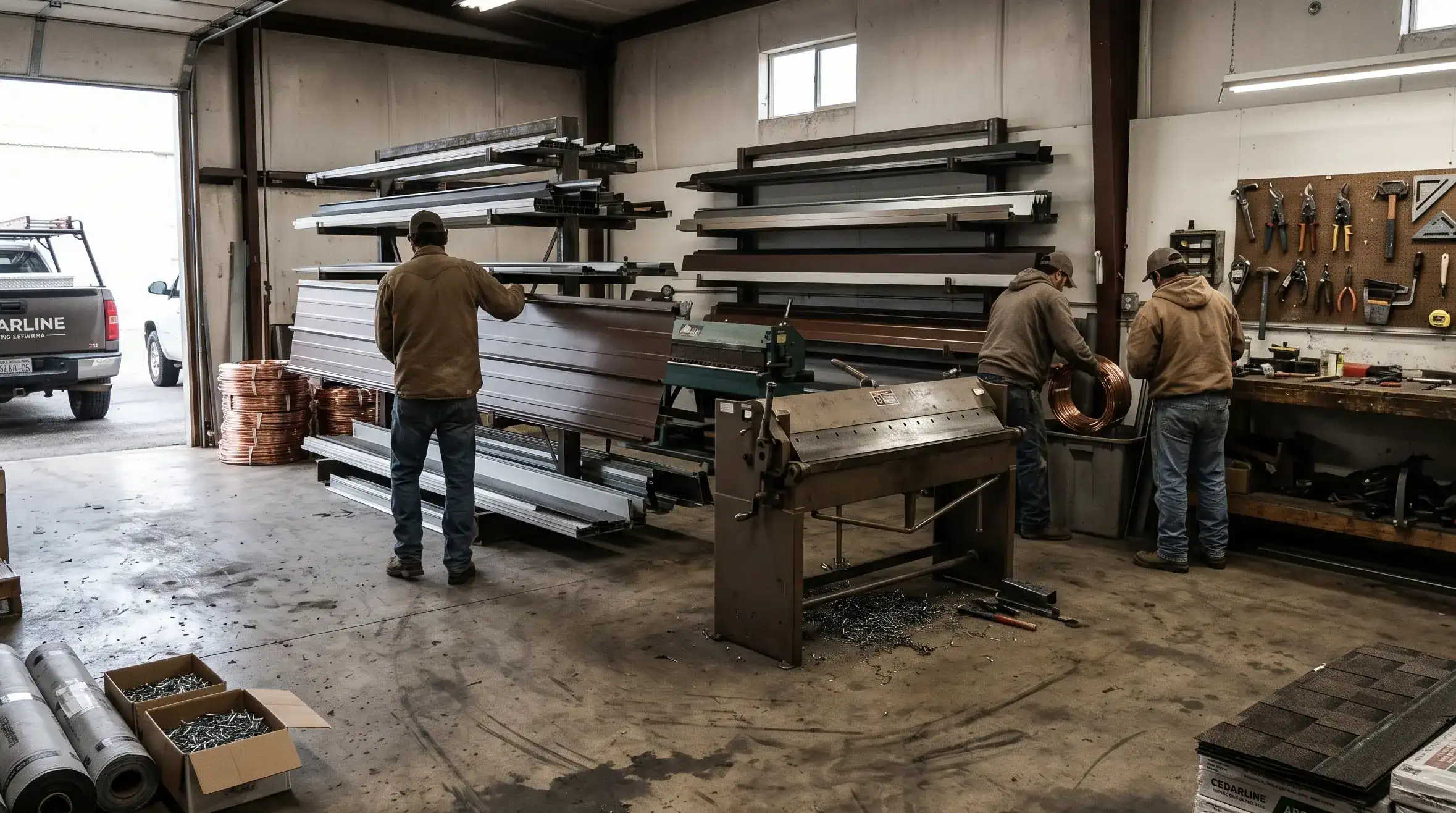
Most of what makes a roof work is invisible from the ground. The underlayment, the flashing, the ventilation, the way the new system is sequenced onto what's underneath. Doing those right is what determines whether the roof lasts thirty years or twelve.
If you’re considering work on your roof, we start with a property assessment.
Request a Roof Assessment